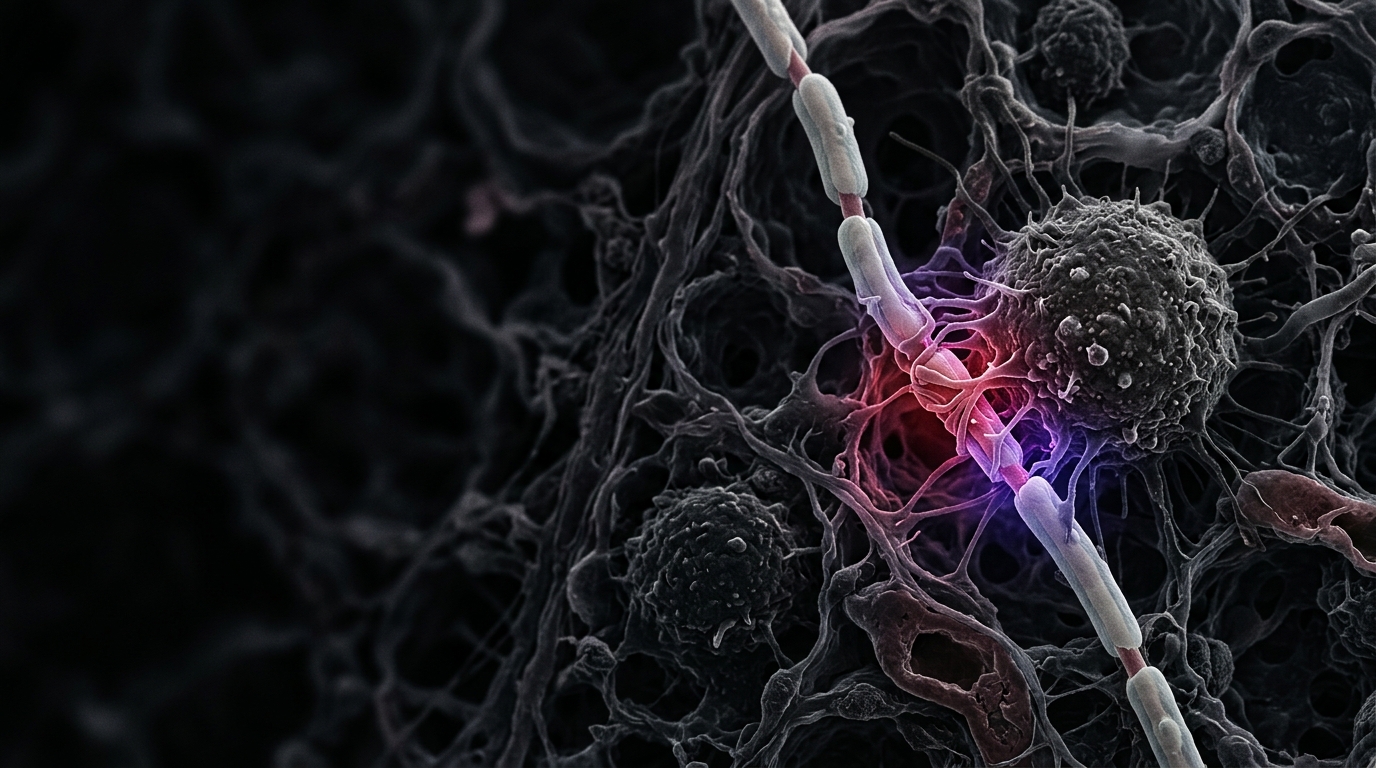
Inhibiting the cell division regulator Polo-like kinase 1 destroys dormant acute myeloid leukemia stem cells. Standard chemotherapy targets rapidly multiplying cancer cells, leaving resting stem cells untouched to drive disease relapse. Blocking this kinase disrupts internal cargo trafficking along cellular scaffolding, causing the resting stem cells to die without ever entering division.
The drug interrupts a direct physical binding between Polo-like kinase 1 and the structural protein MAP1A. Without this connection, internal transport bubbles called vesicles stall along protein tracks like cargo trucks on a severed highway. Surface receptors fail to internalize properly, vesicles accumulate inside the cytoplasm, and digestive compartments called lysosomes break down. This cascading internal failure triggers programmed cell death specifically in the dormant cancer stem cells.
Researchers tested Polo-like kinase 1 inhibitors in acute myeloid leukemia cell cultures and animal disease models. The team measured cell cycle stages, tracking G2/M arrest in dividing cancer cells alongside apoptosis in non-dividing stem cells. The pharmacological tests and live animal assays confirmed the direct depletion of functionally defined leukemia stem cells.
The findings indicate that classical antimitotic drugs and microtubule-targeting agents can eradicate both dividing tumor blasts and dormant stem cells through separate mechanisms. Targeting the MAP1A trafficking pathway provides a therapeutic strategy to clear therapy-resistant resting cells and prevent leukemia relapse.